or Space to navigate
Investor Pitch Deck — 2026

EabhaSeq

The AI-Powered Prenatal Testing Platform

Fixing the broken foundation of genetic screening — earlier, more reliable, and built for the next decade of genomic medicine.

The Story

Eabha means Life in Irish.

Our daughter Eabha was born asleep at 34 weeks. She never got to use her name.

That loss is the reason EabhaSeq exists. Not as a tribute — as a commitment. The prenatal testing system failed to give us the answers we needed, when we needed them. We are building the technology that should have existed.

This is personal. That is why we will not stop.

The Problem

350,000 prenatal tests
fail every year.

Non-invasive prenatal testing (NIPT) is the frontline screen for chromosomal conditions. But the technology has a critical flaw: when fetal DNA concentration in the mother's blood is too low, the test simply fails.

  • Current algorithms were designed in 2008–2011 and have not fundamentally changed
  • Tests cannot be reliably performed before 10 weeks of pregnancy
  • Low fetal fraction causes 350,000 test failures annually
  • Rare conditions are essentially untestable due to absence of training data
  • Getting tested means booking a clinic appointment, travelling, waiting
ANNUAL NIPT FAILURES 350K Failures 5.2M US Tests 3.8M EU Tests 650K UK Tests ~6.7% failure rate across all markets
Root Cause

The entire field is starved
of training data.

Every NIPT algorithm relies on real clinical samples to train and validate. But real samples — especially for rare conditions — are extraordinarily scarce.

  • A single validated trisomy sample costs £475–£750 from the only commercial supplier
  • Trisomy 13 samples are near-impossible to source at any price
  • Most NIPT studies operated on fewer than 20 positive T13 samples
  • No synthetic alternative exists commercially
COST PER VALIDATED SAMPLE PHYSICAL (SeraCare/LGC) £475–£750+ EABHASEQ SYNTHETIC £30 15–25× cost reduction

This data scarcity is the binding constraint on NIPT accuracy. Nobody has solved it — until now.

The Solution

Unlimited, biologically accurate
prenatal DNA data from scratch.

EabhaSeq has built a conditional diffusion model that generates synthetic cell-free DNA at fragment level — the same data that flows through every NIPT pipeline in the world.

92.9%
Distributional Similarity
100%
T21 Sensitivity
+10%
AUC Improvement
107
Conditions Supported
Cost

5,000 samples for £30 each — vs £475–£750+ for physical reference materials

Rare Conditions

Generate samples for conditions that are otherwise impossible to source at any volume

Fetal Fraction

Arbitrary FF sweeps (2–25%) — impossible with physical samples. Indefinite shelf life

No other company offers synthetic cfDNA sequencing data. This market does not exist yet — we are creating it.

Traction

Researchers are already
asking for this.

Revenue Stream 1

Synthetic Data Licensing

An immediate, high-margin commercial product with no direct competitor.

Tier Customer Price
Academic Universities £3k–£18k
Pilot Labs, early validation £6k–£17.5k
Enterprise Large pharma, dx £150k–£200k
Premium Multi-condition £225k–£275k
Regulatory Bundled validation £300k–£400k

Comparables: GSK paid £240M for 23andMe data access. Tempus averages ~$15M per pharma customer. Generic synthetic data platforms contract at $100k–$600k/yr.

REVENUE TARGETS £1.5M £1.0M £750k £500k £0 £100k 2026 £750k 2027 £1.5M+ 2028 Gross margin: 95–97%
Compounding Moat

Every paying customer makes
our clinical model smarter.

Foundation Model CUSTOMER PAYS GENERATE DATA TRAIN MODEL BETTER QUALITY MORE CUSTOMERS The more we sell, the better our model becomes and the more defensible our clinical product.
Revenue Stream 2

From clinic appointment to
fingerprick at home.

Using the Tasso+ home collection device, patients provide a 500µl fingerprick blood sample at home. Our foundation model analyses it. Results in 24–48 hours.

Equipment (~£100k total)

ItemCost
PromethION P2i Sequencer~£48,000
Qiagen EZ2 Connect~£25,000
Library prep station~£5,000
Lab basics & quantification~£20,000

Why Nanopore: £48k vs £250k–£350k (Illumina). 24–48h vs 7–14 days. Native methylation detection. Run-on-demand.

Unit Economics at Scale

GROSS MARGIN BY VOLUME 75% 50% 25% 0% ~30% 1K ~45% 5K ~57% 10K ~68% 25K+ Annual test volume • Consumer price: £249 (vs £350–£500 market)
Long-term Vision

From chromosomal screening
to prenatal exome testing.

Standard NIPT covers a handful of chromosomal conditions. Whole exome sequencing opens up thousands of single-gene disorders. Our architecture is designed to scale.

Phase 1 — Now

Chromosomal NIPT

Trisomies, sex chromosome conditions, microdeletions — 107 conditions

Phase 2 — 2028–2029

Expanded Panel

Rare chromosomal conditions, structural variants

Phase 3 — 2029–2030

Prenatal Whole Exome

Thousands of single-gene conditions, via the same home collection model

CONDITIONS COVERED 5,000+ PHASE 3 200+ PHASE 2 107 PHASE 1 A fingerprick sample → comprehensive genomic picture in 48 hours
Market

A greenfield synthetic data market
inside a $5.7B clinical market.

Synthetic Data Market

  • Global NIPT market: $5.7B growing at ~18% CAGR
  • Pharma data procurement per project: £500k–£5M
  • No existing synthetic cfDNA products — greenfield
  • Serviceable market: £200M+ annually once category established

Clinical NIPT Market

GeographyAnnual PregnanciesTAM
United Kingdom650,000£162M
United States3.66M$2.9B–$7.3B
European Union4.2M€840M–€3.4B
>£8B
Combined Global TAM
6,500
Tests at 1% UK Penetration
£1.6M
Revenue at 1% UK
Regulatory & Clinical

A clear path from validation
to market entry.

Q3 2026
ISO 13485 initiated. Clinical validation study begins. First synthetic data contracts signed.
Q1 2027
Foundation model trained and clinically validated on 1,000+ samples.
Q3 2027
CE marking submitted under IVDR. Pilot lab operational. Home collection model live.
Q2 2028
CE marking approved. First commercial patient tests processed in-house.
Q4 2028
MHRA SaMD registration complete. FDA 510(k) submitted.
2029
US market entry. Expanded panel development. NHS commissioning discussions.
2030
Prenatal exome programme initiated.
Team
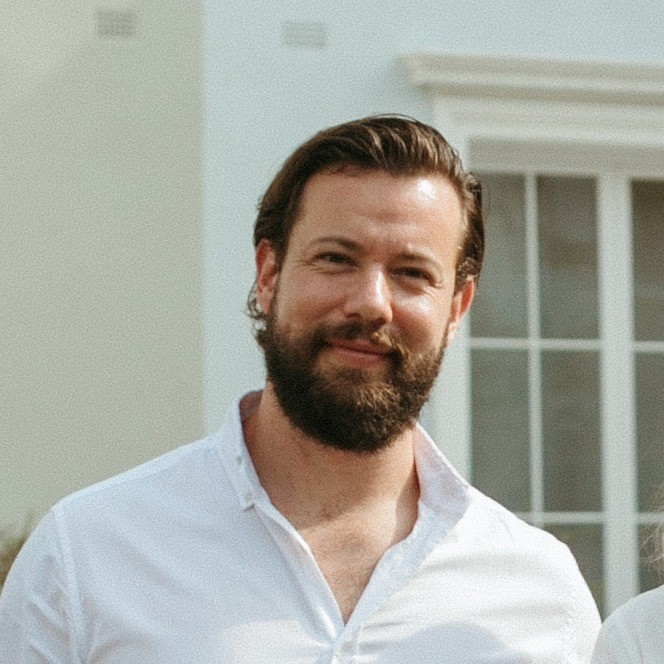
Kyle Redelinghuys

Kyle Redelinghuys

Founder & CEO

Software engineering background applied to genomics. EabhaSeq is named after our daughter, born sleeping at 34 weeks. That experience is the foundation of everything we are building — and the reason this company will not fail.

Prior background across fintech startups with a track record of building and commercialising technical products. Strong on both the engineering and commercial side.

Backed by Emergent Ventures

Tyler Cowen's competitive global grant programme

The Ask
£1,000,000

Seed Round

This funding takes EabhaSeq from validated technology to commercial operation — synthetic data revenue flowing, lab equipped, home collection live, and CE marking on track.

Immediate Revenue

Synthetic data sales begin immediately. 95–97% gross margins. Does not depend on regulatory approval.

Path to Series A

Designed to reach Series A on the strength of revenue, not just milestones.

Timing

Why now.

Summary

Building the data infrastructure and clinical platform that the entire prenatal genomics industry is missing.

The question isn't whether synthetic cfDNA data has value.
The question is who gets to own that market — and what they build with it.

We intend to own it.