The AI-Powered Prenatal Testing Platform
Fixing the broken foundation of genetic screening — earlier, more reliable, and built for the next decade of genomic medicine.
Our daughter Eabha was born asleep at 33 weeks. She never got to use her name.
That loss is the reason EabhaSeq exists. Not as a tribute — as a commitment. The prenatal testing system failed to give us the answers we needed, when we needed them. We are building the technology that should have existed.
This is personal. That is why we will not stop.
Non-invasive prenatal testing (NIPT) is the frontline screen for chromosomal conditions. But the technology has a critical flaw: when fetal DNA concentration in the mother's blood is too low, the test simply fails.
Every NIPT algorithm relies on real clinical samples to train and validate. But real samples — especially for rare conditions — are extraordinarily scarce.
This data scarcity is the binding constraint on NIPT accuracy. Nobody has solved it — until now.
EabhaSeq has built a conditional diffusion model that generates synthetic cell-free DNA at fragment level — the same data that flows through every NIPT pipeline in the world.
5,000 samples for £30 each — vs £475–£750+ for physical reference materials
Generate samples for conditions that are otherwise impossible to source at any volume
Arbitrary FF sweeps (2–25%) — impossible with physical samples. Indefinite shelf life
No other company offers synthetic cfDNA sequencing data. This market does not exist yet — we are creating it.
An immediate, high-margin commercial product with no direct competitor.
| Tier | Customer | Price |
|---|---|---|
| Academic | Universities | £3k–£18k |
| Pilot | Labs, early validation | £6k–£17.5k |
| Enterprise | Large pharma, dx | £150k–£200k |
| Premium | Multi-condition | £225k–£275k |
| Regulatory | Bundled validation | £300k–£400k |
Comparables: GSK paid £240M for 23andMe data access. Tempus averages ~$15M per pharma customer. Generic synthetic data platforms contract at $100k–$600k/yr.
Using the Tasso+ home collection device, patients provide a 500µl fingerprick blood sample at home. Our foundation model analyses it. Results in 24–48 hours.
| Item | Cost |
|---|---|
| PromethION P2i Sequencer | ~£48,000 |
| Qiagen EZ2 Connect | ~£25,000 |
| Library prep station | ~£5,000 |
| Lab basics & quantification | ~£20,000 |
Why Nanopore: £48k vs £250k–£350k (Illumina). 24–48h vs 7–14 days. Native methylation detection. Run-on-demand.
Standard NIPT covers a handful of chromosomal conditions. Whole exome sequencing opens up thousands of single-gene disorders. Our architecture is designed to scale.
Chromosomal NIPT
Trisomies, sex chromosome conditions, microdeletions — 107 conditions
Expanded Panel
Rare chromosomal conditions, structural variants
Prenatal Whole Exome
Thousands of single-gene conditions, via the same home collection model
| Geography | Annual Pregnancies | TAM |
|---|---|---|
| United Kingdom | 650,000 | £162M |
| United States | 3.66M | $2.9B–$7.3B |
| European Union | 4.2M | €840M–€3.4B |
Founder & CEO
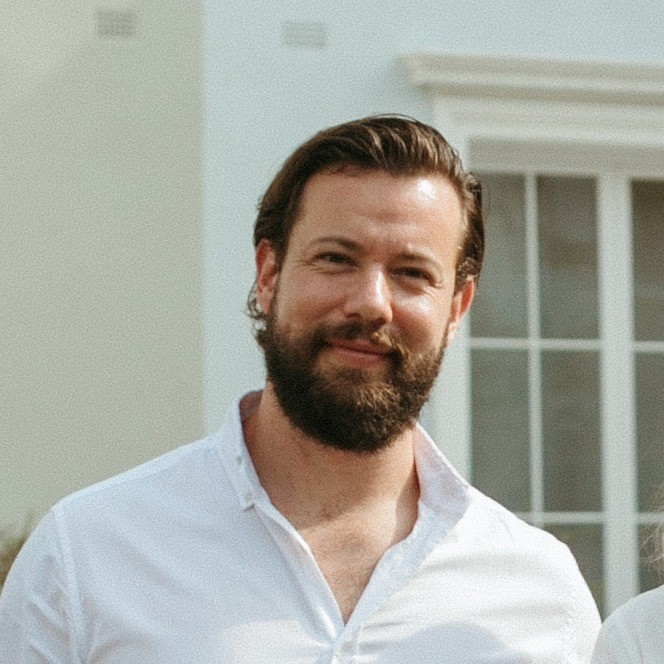
Software engineering background applied to genomics. EabhaSeq is named after our daughter, born sleeping at 33 weeks. That experience is the foundation of everything we are building — and the reason this company will not fail.
Prior background across fintech startups with a track record of building and commercialising technical products. Strong on both the engineering and commercial side.
Tyler Cowen's competitive global grant programme
Seed Round
This funding takes EabhaSeq from validated technology to commercial operation — synthetic data revenue flowing, lab equipped, home collection live, and CE marking on track.
Synthetic data sales begin immediately. 95–97% gross margins. Does not depend on regulatory approval.
Designed to reach Series A on the strength of revenue, not just milestones.
The question isn't whether synthetic cfDNA data has value.
The question is who gets to own that market — and what they build with it.
We intend to own it.